
A report by Bain & Company and HealthQuad identifies remote patient monitoring, OT/ICU optimisation, and chronic disease management as key opportunities for Artificial Intelligence in Indian healthcare. The report highlights a shift from experimental AI to real-world applications, driven by government initiatives, increasing EMR adoption, and a robust startup ecosystem. AI's autonomous capabilities are rapidly advancing while costs decrease, creating significant growth potential for providers and startups.

Atomic Energy Commission chairman Ajit Kumar Mohanty stated that India is on the verge of a significant technological transformation, driven by advancements in AI, quantum technologies, and other fields. Speaking at BIT Mesra's convocation, he emphasised the need for strong indigenous capabilities, skilled professionals, and interdisciplinary collaboration to achieve a developed India. Other speakers, including BIT Mesra's Chancellor and Vice Chancellor, echoed the importance of continuous learning and contributing to national progress.

Prof Ajit Kumar Chaturvedi, Vice-Chancellor of Banaras Hindu University, highlighted Artificial Intelligence's transformative potential in healthcare, emphasising its role in augmenting doctors' capabilities and enhancing efficiency. Speaking at PGIMER's Foundation Day, he stressed the need for India to develop AI solutions tailored to its unique healthcare realities, moving beyond being a mere consumer of Western-trained systems. PGIMER Director Vivek Lal also detailed the institute's expansion and commitment to affordable healthcare.

Assam Chief Minister Himanta Biswa Sarma launched the North East Seva Innovation Challenge (NESFIC), envisioning the region as India's 'living laboratory' for technology and problem-solving. The initiative aims to empower young innovators to address real-world challenges faced by government, industries, and citizens, with a focus on practical implementation and government procurement.

The CEO of the National Health Authority, Sunil Kumar Barnwal, highlighted BRICS nations' shared aspiration for connected, patient-centric, and resilient healthcare systems through digital health infrastructure and responsible AI. Discussions at the 16th BRICS Health Ministers' meeting focused on overcoming challenges like limited interoperability and workforce constraints, with countries like Brazil and Indonesia sharing successful digital health initiatives.
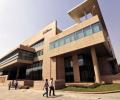
IT services firm Tech Mahindra has announced a collaboration with AI coding platform SpaceXSI to help global enterprises modernise legacy applications, accelerate software delivery, and improve developer productivity through AI-assisted engineering across the software lifecycle. The partnership aims to embed AI intelligence across the software development lifecycle for better business outcomes, focusing on sectors like technology, telecommunications, and banking.
A World Bank report highlights how Artificial Intelligence-powered weather forecasts have enabled small farmers in Telangana, India, to save up to USD 560 by adapting their farming practices to specific risks. The report, "The Promise of Artificial Intelligence," advocates for developing countries to rapidly adopt small, low-cost AI tools to enhance productivity, improve government services, and avoid missing out on the AI revolution.

While AI can help automate routine, repetitive tasks, jobs that require high emotional intelligence, communication skills, creativity and the ability to work in unpredictable situations are likely to withstand the rise of AI, says Kumar Rajagopalan, vice president (strategic initiatives) and country head (India), at Dexian, a global provider of IT consulting, digital transformation and workforce solutions.
Researchers at IIT Kharagpur, in collaboration with the University of Illinois Urbana-Champaign, have developed a highly sensitive sensor technology. This innovation allows ordinary smartphone cameras to detect extremely tiny, invisible objects, potentially leading to low-cost, portable medical testing and other applications requiring the detection of minute substances.

The objective should be clear: Energy security without abandoning environmental responsibility; water security without ignoring local concerns; and strategic resilience without sacrificing public confidence, notes Varun Arya.

A new report by Philips indicates that Artificial Intelligence is significantly enhancing healthcare in India, with 71% of professionals reporting increased patient capacity and 85% believing it improves patient outcomes. AI is also seen as a tool to improve access to quality healthcare in rural areas, with patients also embracing its benefits for more meaningful interactions with doctors.
Union Health Minister J P Nadda has emphasised the need for sound regulation, ethical oversight, and equity in the application of Artificial Intelligence (AI) to healthcare, speaking at the World Health Assembly in Geneva.

The Budget reframes healthcare as a strategic national capability, backing biopharma innovation, workforce expansion and technology-led governance to power India's next growth phase.
The National Medical Commission is emphasising the importance of preparing doctors and healthcare systems for the responsible and effective use of artificial intelligence, highlighting the need for ethical and equitable AI adoption in healthcare.
Hexaware Technologies has announced Vivek Jetley as its CEO-Designate, succeeding Srikrishna Ramakarthikeyan. Jetley will take over on October 28, 2026, with a mandate to accelerate growth and scale the company's AI-led services globally, leveraging his extensive experience in AI and enterprise transformation.

India's leading IT companies are anticipated to report subdued revenue growth and largely stable margins for the July-September quarter, as clients maintain tight discretionary budgets, with analysts closely watching the conversion of strong bookings into revenue and the impact of AI on traditional services.
A new IDC report reveals that artificial intelligence is prompting organisations worldwide to retrieve and utilise previously archived, "cold-tier" data for AI training, significantly increasing its perceived value and leading to longer data retention periods and a burgeoning market for datasets.

The question for the next 20 years is not whether India can become a $5 trillion or $10 trillion economy. Those are attractive targets, but the real question is whether India can create enough productive jobs, educate its children properly, make its cities liveable, and give hundreds of millions of people a substantially better life, asserts Ramesh Menon.

'Improved law and order and transparent governance have helped change UP's investment image.'

Econz IT Services, in partnership with Google Cloud, has launched Bengaluru's first Gemini Enterprise Experience Centre. This centre provides an immersive environment for businesses to develop and deploy advanced Agentic AI solutions, marking a significant step in enterprise AI innovation in the region.

In the next 36 months nearly 25 to 40 per cent of jobs will be under threat from AI and job losses are inevitable.

Air India, SkyDrive, and Suzuki Motor Corporation have signed an initial pact to conduct a joint feasibility study on using electric vertical take-off and landing (eVTOL) aircraft for medical air logistics in India. This collaboration aims to address severe traffic congestion in major Indian cities, which poses challenges for time-critical medical transport, by developing last-mile emergency medical solutions.

The companies that grow are the ones that adapt quickly, embrace technology thoughtfully and never lose sight of the customer.

India has launched its first integrated phygital service centre in Umri village, Madhya Pradesh, aiming to provide online services and boost rural development through digital connectivity and various essential services.

Who says everyday dressing has to be predictable? Dr Akanksha Mantri proves that style can be elegant, experimental and full of personality no matter the occasion.

Karnataka Chief Minister D K Shivakumar announced the establishment of India's first government-driven Artificial Intelligence University and an AI Hub in Bengaluru. This initiative aims to position Karnataka as a global leader in responsible AI innovation, fostering talent, research, and collaboration. The state seeks to become an AI-native state, leveraging AI to improve governance and daily life across various sectors.

Scientists at the GraphIN 2026 conference highlighted the potential of ultra-sensitive graphene sensors for rapid disease detection and various other applications, including flexible heating pads for neonatal care and lightweight structures for unmanned aerial vehicles.

From guns to handlooms. From forest trails to a public runway. Women who had once been associated with that conflict walked into the spotlight wearing Bastar's traditional textiles.

Prime Minister Narendra Modi celebrated 11 years of the Digital India initiative, highlighting its role in redefining governance, empowering citizens, and accelerating all-round development. He emphasised its impact on digital payments, direct benefit transfers, and expanding digital public infrastructure, making technology a powerful instrument for 'Ease of Living' across India, including tier-2 and tier-3 cities.
The World Bank's "World Development Report 2026" urges developing countries to adopt low-cost AI tools to accelerate progress in healthcare, education, and judicial services. The report highlights AI's potential to boost productivity and improve public services, while noting that jobs in high-income countries are more at risk from automation than those in developing nations.

The government on Sunday gave a strong push to upgradation and expansion of healthcare infrastructure, medical education and pharma sector with the Union Budget 2026-27 announcing a slew of steps, including those aimed at making India a global hub for allied healthcare professionals and biopharma manufacturing.

Prime Minister Narendra Modi has introduced a 'Sapta Dhara' (seven-stream) reform framework, aiming to propel India into a developed nation by 2047. This comprehensive plan focuses on key sectors including manufacturing, agro-food processing, technology, logistics, defence, green and blue economy, and soft power, leveraging the nation's youth potential.

Tata Consultancy Services (TCS) has announced a global partnership with AI major Anthropic to help enterprises accelerate their adoption of artificial intelligence, including equipping 50,000 TCS employees with Anthropic's Claude AI models.
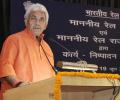
Jammu and Kashmir LG Manoj Sinha addressed the 'IMMUNOCON-2026' conference, stressing the importance of translating scientific immunological knowledge into public health action. He urged scientists to focus on precision medicine, immuno-AI fusion, climate immunity, and accelerating translational research to combat infectious diseases and enhance healthcare delivery.
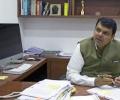
Maharashtra Chief Minister Devendra Fadnavis announced the state's ambition to become India's leader in quantum technology. The state plans to build a robust ecosystem, align with the National Quantum Mission, and train over 5,000 professionals, recognising AI, semiconductors, and quantum tech as key pillars for future growth and global competitiveness.
Jammu and Kashmir LG Manoj Sinha emphasised the critical need to translate scientific immunological knowledge into public health action. Speaking at the IMMUNOCON-2026 conference, he highlighted immunology's evolving role in healthcare, stressing continuous innovation and collaboration in areas like immuno-AI fusion, climate immunity, and translational medicine to combat infectious diseases and prepare for future global health threats.

The Bastar region of Chhattisgarh, India, is transitioning away from decades of Maoist conflict, with plans to convert security camps into public infrastructure. A senior Maoist commander recently surrendered, marking a significant step in the government's efforts to eliminate Naxalism.

In her address to the nation on the eve of the country's 80th Independence Day, the president stressed that just as government and society remain united to ensure national security, everyone must contribute through joint and concerted efforts to safeguard the present and future of students.

Underlining that students are the "architects of India's future," President Droupadi Murmu on Friday said the government is taking comprehensive steps to reform public examinations to completely curb paper leaks and unfair means, making the system transparent, secure, and trustworthy.

Wipro's net profit in the first quarter saw minimal growth, rising less than one per cent to 3,352 crore, while revenue increased by 10.6 per cent to 24,480 crore. The IT services segment, a key metric, grew by only one per cent year-on-year, falling short of analyst estimates amidst a challenging demand environment and longer decision cycles from clients.
